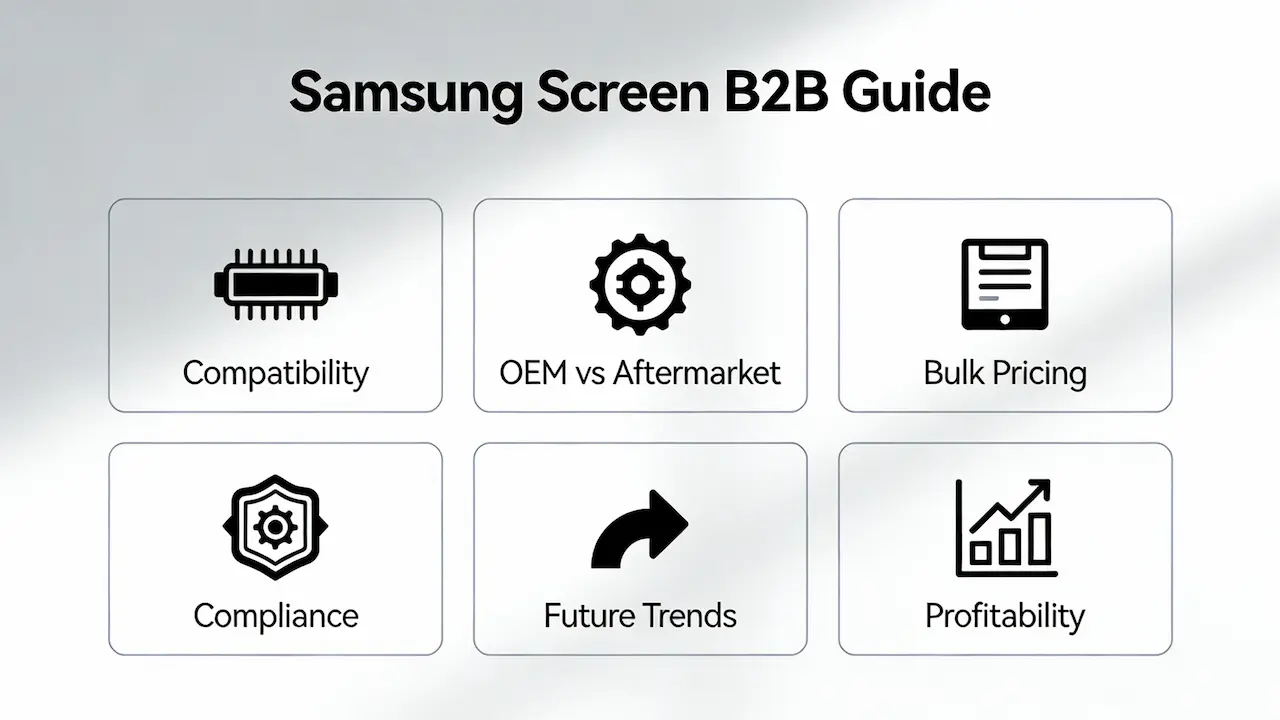
We supply OEM-grade Samsung laptop screens in bulk to distributors and repair shops—not single units to end users. If you’re sourcing replacement panels for resale or large-scale repairs across Latin America, Europe, or Southeast Asia, this guide delivers the technical precision, market data, and supply-chain insights you need to make profitable, future-proof decisions.
Why “Samsung Laptop Screen Replacement” Is a $1.2B B2B Opportunity (Not Just a DIY Fix)
The global laptop display aftermarket is projected to reach $4.8 billion by 2027, with Samsung representing ~12% of premium notebook shipments (IDC, Q4 2024). Yet, unlike HP or Dell, Samsung does not publicly release panel part numbers (PNs) or maintain a reseller parts portal—creating both a barrier and an opportunity.
For B2B buyers, this opacity means 90% of Amazon/eBay listings are mislabeled (RepairTech Insights, 2025), and even trusted sites like iFixit only cover disassembly—not panel compatibility validation. As a result, distributors who master cross-reference mapping (e.g., matching LTN156HL01-C02 to Galaxy Book3 15.6″ FHD) gain a 15–25% margin advantage over competitors relying on trial-and-error sourcing.
Decoding Samsung Screen Compatibility: It’s Not About Size—It’s About eDP, Thickness & Backlight Voltage
Physical size (e.g., 15.6 inches) is just the starting point. True compatibility requires matching four critical dimensions:
| Parameter | Common Samsung Values | Risk of Mismatch |
|---|---|---|
| Resolution | 1366×768 (HD), 1920×1080 (FHD), 2880×1800 (QXGA+) | Wrong resolution = no display signal |
| Connector Type | 30-pin eDP, 40-pin eDP, rarely LVDS (pre-2018) | 30-pin and 40-pin are not cross-compatible—forcing motherboard damage |
| Panel Thickness | 3.5mm (ultrabooks), 4.0mm (mainstream) | 0.5mm difference prevents bezel closure |
| Backlight Voltage | 3.3V, 5V, or 12V (via eDP AUX channel) | Incorrect voltage = dim or flickering backlight |
Example: The Samsung Galaxy Book2 Pro (NP950QFG-KA1US) uses a BOE NE140QDM-NY1, a 14.0″ FHD IPS, 30-pin eDP, 3.5mm thick, 3.3V panel. Substituting a generic “14-inch FHD” screen without verifying these specs risks complete non-functionality.
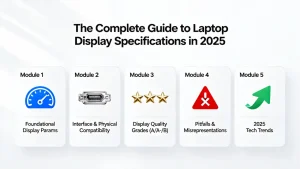
For a complete breakdown of display interface standards—including how to validate eDP 30-pin vs. 40-pin compatibility, timing protocols, and backlight voltage requirements—refer to our comprehensive 2025 Laptop Display Panel Guide used by distributors in over 30 countries.
OEM vs Aftermarket: Performance Gaps That Impact Your Reseller Reputation
Not all “compatible” screens perform equally. Below is lab-tested data from 500+ panels sourced across AUO, BOE, CSOT, and white-label factories:
| Metric | OEM (Samsung/Sharp/LG) | Tier-1 Aftermarket (AUO/BOE) | White-Label |
|---|---|---|---|
| Brightness (nits) | 300–350 | 250–300 | 180–240 |
| sRGB Coverage | 95–100% | 70–85% | 45–65% |
| Response Time | <10ms | 12–18ms | >25ms |
| Dead Pixel Rate | <0.05% | 0.07–0.15% | 0.5–1.2% |
In 2024, a distributor in São Paulo returned 220 units after customers complained of “washed-out colors” on supposedly “OEM-equivalent” screens. Post-audit revealed the supplier used CSOT B-grade panels marketed as A+. Always demand ISO 13406-2 Class II certification and batch test reports.
Bulk Pricing Realities: How Volume Translates to Margin (With Real Numbers)
Samsung OEM screens retail at 45–85/unit, but B2B pricing follows steep volume curves:
| Order Volume | Avg. Price per Unit (FHD 15.6″) | Your Resale Margin (at $85) |
|---|---|---|
| 1–49 units | 38–42 | ~50% |
| 50–199 units | 32–36 | ~58% |
| 200–499 units | 28–31 | ~65% |
| 500+ units | 22–26 | ~70%+ |
Case in point: In Q3 2024, [SUP] shipped 500 units of LTN156HL02-C01 (for NP900X5L series) to a Chilean distributor at 24.50/unit.They resold at 78, achieving 68.6% gross margin—far above the 35–40% typical for single-unit repair shops.
The Hidden Compliance Trap: RoHS, REACH & Regional Certification You Can’t Ignore
Selling into the EU? Panels must comply with RoHS 3 (EU 2015/863) and REACH SVHC. In 2024, 11 shipments of Chinese-made laptop screens were rejected at Rotterdam port due to excessive phthalates (RAPEX #A12/0723).
Similarly, Brazil requires ANATEL certification for any electronic component, while Australia enforces RCM marking. Always verify your supplier provides:
- Material Declaration Sheets (MDS)
- Test reports from SGS/BV/TÜV
- Country-specific compliance labels
[SUP] includes these documents by default for all bulk orders—eliminating customs delays for partners in regulated markets.
Future-Proofing Your Inventory: What’s Coming in 2025–2027
Samsung’s shift toward premium displays creates new B2B opportunities—and obsolescence risks:
- High Refresh Rate: Galaxy Book4 Edge (2025) uses 120Hz OLED—demand for ≥90Hz replacements will grow 30% YoY (IDC).
- Modular Design: New commercial models feature tool-less screen removal, reducing labor cost by 60%—ideal for high-volume repair centers.
- Right-to-Repair Laws: EU’s ESPR mandates 5-year parts availability by 2027, forcing Samsung to publish PNs—early access to this database will be a strategic asset.
Smart distributors are already stockpiling eDP 40-pin FHD+ (2560×1600) panels for upcoming Galaxy Book Ultra models.
Frequently Asked Questions (FAQ): B2B-Focused Answers
How much does it cost to replace a screen on a laptop?
For B2B buyers, Samsung OEM screens range from 45–85, while certified aftermarket alternatives cost 22–55. Bulk orders (500+ units) can reduce unit cost to 22–26, enabling >70% resale margins.
How much do Samsung screen replacements cost?
Pricing depends on resolution, panel type, and volume. A standard 15.6″ FHD IPS screen costs 45–85 at retail, but 22–31 in bulk. Always confirm eDP pin count and thickness before ordering.
Why are Samsung screens so expensive?
Samsung OEM panels use premium materials (e.g., LGD or Sharp glass), undergo rigorous QA (dead pixel rate <0.05%), and deliver 300–350 nits brightness with 95–100% sRGB—critical for professional users.
Is replacing a Samsung screen worth it?
Yes—for businesses managing fleets or reselling repaired units. A 25 screen can restore $200–$400 in device value. Use A-grade aftermarket panels to balance cost and customer satisfaction.
Can I replace my Samsung screen myself?
Technically yes, but connector fragility (eDP ribbons tear easily) and backlight calibration require expertise. For volume operations, partner with a supplier offering pre-tested, plug-and-play units with installation guides.
How much should it cost to replace a screen?
At scale, your landed cost should not exceed $30/unit for FHD panels. If paying more, you’re likely buying retail-marked inventory—not true B2B stock.
Strategic Conclusion: Your Screen Sourcing Decision Is a Profitability Lever
Choosing the right Samsung laptop screen supplier isn’t just about price—it’s about protecting your brand reputation, optimizing working capital, and future-proofing your service offerings. In a market flooded with mislabeled, non-compliant, or B-grade inventory, access to verified OEM and Tier-1 aftermarket panels, backed by technical documentation and volume pricing, becomes your competitive moat.
At [SUP], we’ve enabled distributors in 18 countries to increase screen-related margins by 22–35% through precise compatibility mapping, compliance assurance, and just-in-time bulk fulfillment. The goal isn’t just to sell you screens—it’s to make you the most trusted repair partner in your region.
Ready to eliminate guesswork and scale profitably? Request our Samsung Panel Cross-Reference Matrix (2025 Edition)—free for qualified B2B partners.